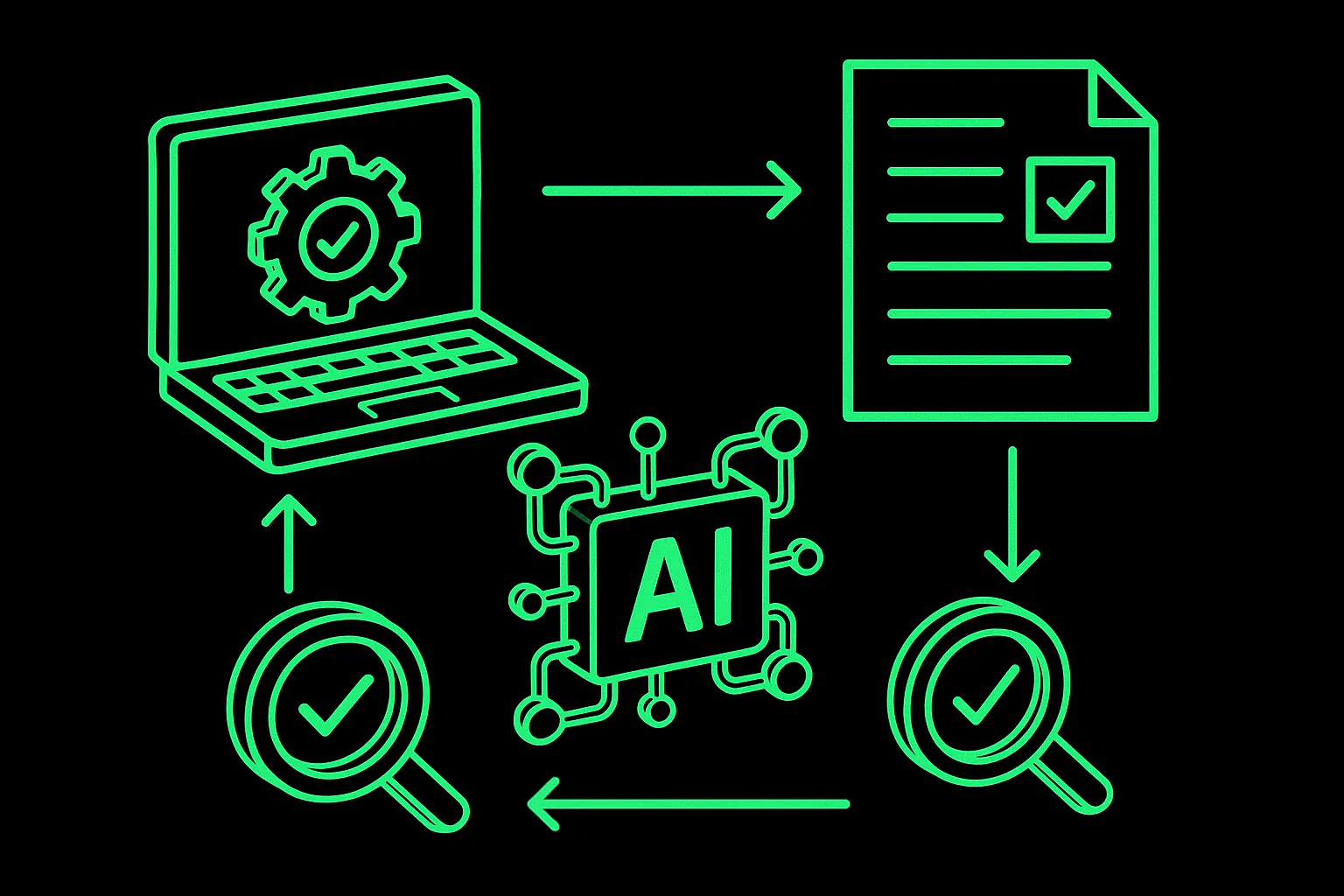

Some of the smartest engineers I know remain convinced that large-language-model (LLM) tools are a passing craze. I sympathize: tech hype cycles are exhausting. Yet after months of building real software with agents such as Cursor, Devin-style workflows, and Claude Code, I’m convinced these systems are already the second-most consequential advance of my career—behind only the Internet itself.
What “Modern” LLM Development Looks Like
If your only experience is pasting prompts into ChatGPT and copying fragile snippets, you’re missing the point. Today’s serious practitioners let agents
- crawl entire repositories,
- open PRs, run tests, and iterate automatically, and
- call arbitrary CLI tools you wire up.
In practice an agent behaves like a tireless junior engineer who never forgets a command-line flag and never stops at 6 p.m.
The Upside in Plain Terms
- Tedious code writes itself. Dependency scaffolding, rote boilerplate, and test refactors disappear, freeing you to focus on architecture and product thinking.
- Google once, not twenty times. An LLM looks up obscure API calls faster than you can type “Stack Overflow.”
- Momentum on tap. Agents hand you a project in the “it almost runs” state—exactly where the fun starts.
You still review every diff, but the floor now starts at “competent” rather than “blank file.”
Constructive Answers to Common Objections
- “I won’t understand the generated code.” You own the merge button. Spend five minutes massaging style, just as you would with a human PR.
- “Hallucinations make this dangerous.” Agents compile, test, and loop until the build passes. Errors feed back into the prompt; nonsense rarely survives.
- “It’s still mediocre.” Mediocre is fine for glue code. Raising the minimum quality bar while you polish the critical paths is a net win.
- “This ruins the craft.” Buy the dining table, hand-carve the heirloom workbench. Professional software is about solving problems, not perfect dovetails everywhere.
- “Jobs will vanish.” Automation has always shifted roles—from databases to CI pipelines. The best defense is embracing the new leverage early.
A Better Framing
Think of LLM tools as pouring concrete for you: they lay a flat, fast foundation so you can design the building. They do not replace judgment, taste, or accountability, and they certainly do not grant production access on their own. But they do remove friction that historically killed side projects and slowed features.
Just as open-source libraries eliminated weeks of plumbing code, AI assistants wipe out another layer of drudgery. The ceiling for brilliance might not rise overnight, but the floor—where most of our time is spent—jumps dramatically.
Where to Go from Here
- Wire up an agent to your real repo. Give it strict tests and linters, then ask for a small feature.
- Treat it like an intern. Review, coach, and iterate. Measure the delta in shipped value, not line count.
- Stay pragmatic. Skip the AGI debates and focus on whether today’s tools save you an hour you can reinvest elsewhere.
Something real is happening. Having a career in tech is all about staying relevant and it's worth your future to take AI seriously.